Research Impact
Research Impact provides a collection of online resources to support you in understanding and planning for impact
Created in collaboration with innovative thought leaders, universities and institutions, all aiming to make "impact culture" a daily reality for researchers, these impact resources are designed to help you to plan for impact, develop your skills around creating impactful research and understand your institutions capacity to support research impact.
Impact skills
A range of learning materials to support developing your skills around impact, covering multiple stages of the research workflow.
Impact planning
Resources for anyone who wants to plan, articulate and execute the impact associated with their project.
Institutional health
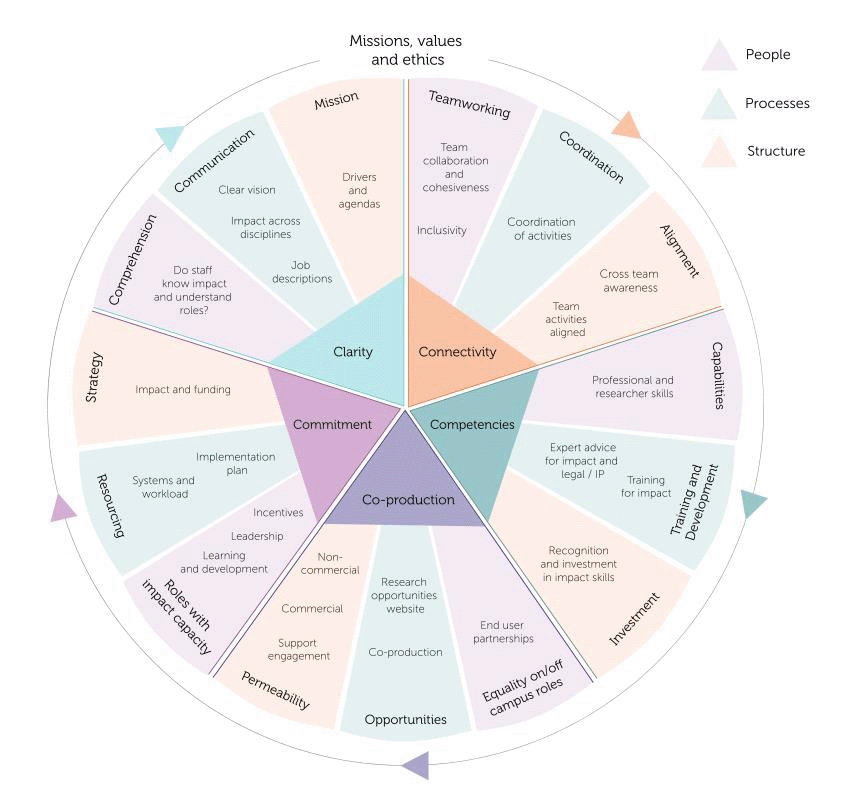
Guidance to help you assess the health of your institution in relation to impact, to highlight areas that are running harmoniously, and others which might need some honing.
Impact Literacy for Researchers and Institutions
What is impact?
Impact is the promised land of research. It means that you’ve arrived, but it also means you’re going places.
Impact is the provable benefits of research in the real world. It’s not judged by traditional methods – such as citations – but appraised by factors we can see and feel in wider society. Impact emerges differently across various disciplines, but ultimately it is about connecting academic research to the world around us.
It is also driven by other dynamics, including funder requirements, research assessments and, of course, societal shifts and changing environments. While these are clear points of focus, the real significance comes from making impact meaningful to you, your partners and your research. We believe that maximum benefit comes from planning impact – enabling you to create and navigate compelling pathways for your research.
Know how
Consider the definition of ‘impact’. In its truest sense, it crystallises change or underlines the effects of research.
The process by which change happens, however, is covered by another concept – ‘knowledge mobilisation’. There are many plot points for this methodology, including engagement, community-based research, knowledge transfer, commercialisation, dissemination and communication.
Essentially, knowledge mobilisation is the fertile breeding ground for impact and the opportunities it is given to thrive within the context of research.
Impact culture
Impact is omnipresent, it’s a lifestyle choice and it operates at all levels of a research organisation. With impact ambitions increasingly focused on the link between research/researcher and impact, the role of the institution can often be overlooked. Building an institutional impact culture and appreciation of impact literacy shapes the space, strategy and support needed for research projects to develop a life of their own.
Irrespective of type, size or funding – institutions must establish meaningful ways to connect research to the world outside academia. Impact expertise, however, cannot be the responsibility of one person – it is only achievable through teamwork, partnerships and plenty of high fives. There is no single way to yield impact and, equally, there isn’t an institutional template to make it happen. Impact requires a unique approach to each project, and that’s part of the exciting challenge.
Contributors